




Basic facts + statistics
- More than 720,000 people die by suicide each year. Globally, suicide is the third leading cause of death among 15-29-year-olds.
- It is estimated that over 14 million adults worldwide thought about suicide in 2024.
- There is no single cause for suicide. It often emerges when multiple stressors and health challenges combine, leading to feelings of hopelessness and despair.
- 46% of people who die by suicide had a diagnosed mental health condition.
- Access to lethal means directly contributes to suicide rates. Firearms account for 57% of all suicide deaths. Firearm suicide deaths have increased nearly 13% since 2020 and reached an all-time high in 2024.
- 36% of LGBTQ+ young people seriously considered attempting suicide in the past year, including 40% of transgender and nonbinary young people. 44% of LGBTQ+ young people who wanted mental health care in the past year were not able to get it.
Myths + Truths
Myth: Suicide is selfish.
Truth: Many people who attempt or die by suicide feel like they are a burden to the people in their lives. Their pain and intrusive thoughts can convince them that the world would be better off without them. In their mind, suicide is the least selfish option because of feeling like a burden.
Myth: You can’t ask someone if they are thinking about suicide.
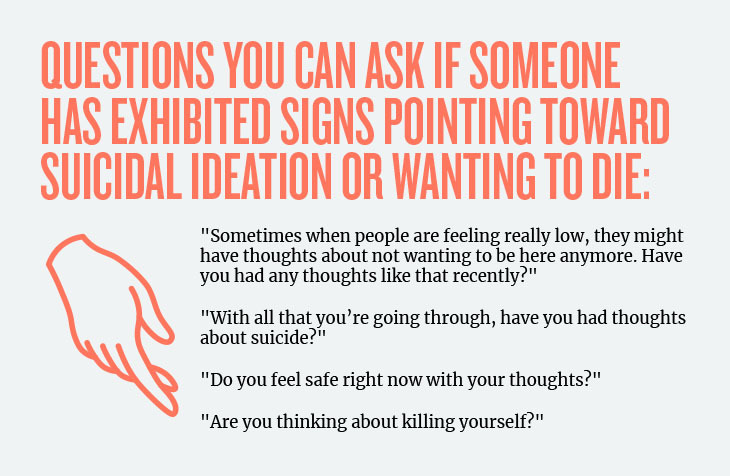
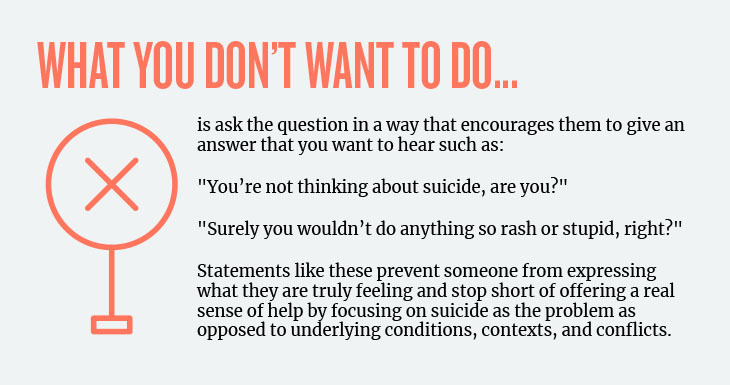
Truth: Asking the question won’t cause someone to suddenly start considering suicide. Instead, it gives them the space to be honest about what they’re experiencing. We want to be thoughtful about how we phrase the question so the person feels safe and not judged. “Are you thinking about suicide?” or “Are you thinking of hurting yourself?” are neutral ways of asking.
Myth: You have to be mentally ill to think about suicide.
Truth: While some mental health diagnoses can be risk factors for suicide, people may consider suicide for entirely different reasons. Other risk factors include trauma, major life changes, family history, and serious physical health conditions.
Myth: Threats of suicide are just for attention.
Truth: When someone shares a truth like this, they’re seeking connection and support. The most compassionate way to react is by listening, letting them know you care about them, and helping them take the next step toward healing.
Myth: Every suicide happens for the same reason.
Truth: Suicide isn’t that simple, which means we have to be willing to listen to the people who have considered or attempted suicide when they tell us why. And then we need to provide support that speaks directly to those reasons.
Myth: Suicide ideation is the same as planning to die by suicide.
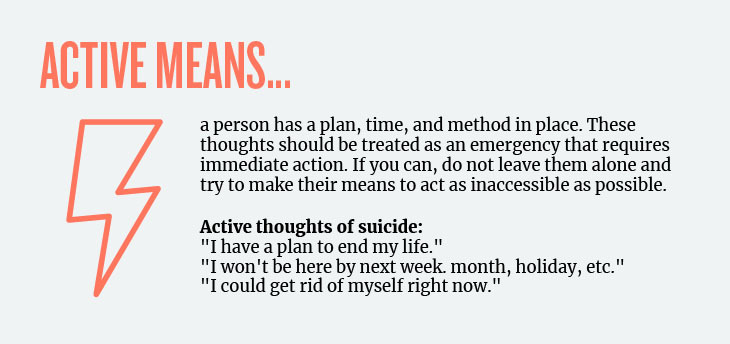
Truth: People can experience intrusive thoughts about suicide without ever creating a plan or making an attempt. It's important to be open to asking questions and listening closely so you can respond and offer helpful forms of support.
Myth: I don’t have a role in preventing suicide.
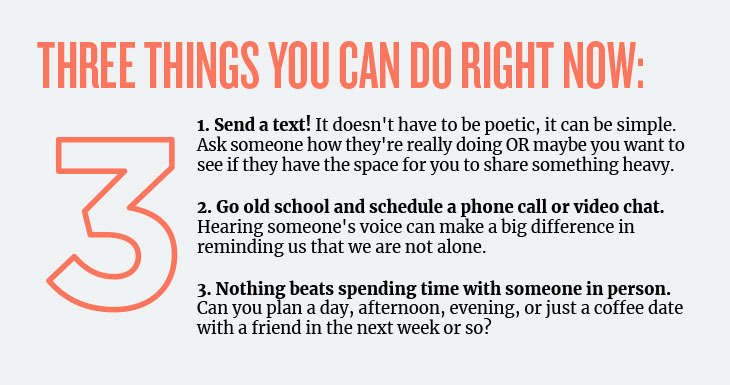
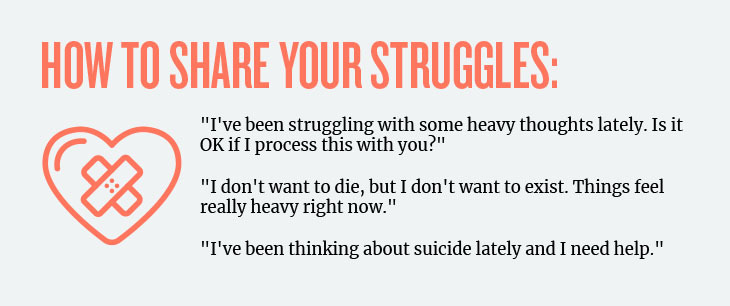
Truth: From the “small” personal connections to the big systemic changes, we can all play a role in suicide prevention. One way to start is by creating space for honest conversations with your people. Share how you’re really doing and be intentional about checking in with them.
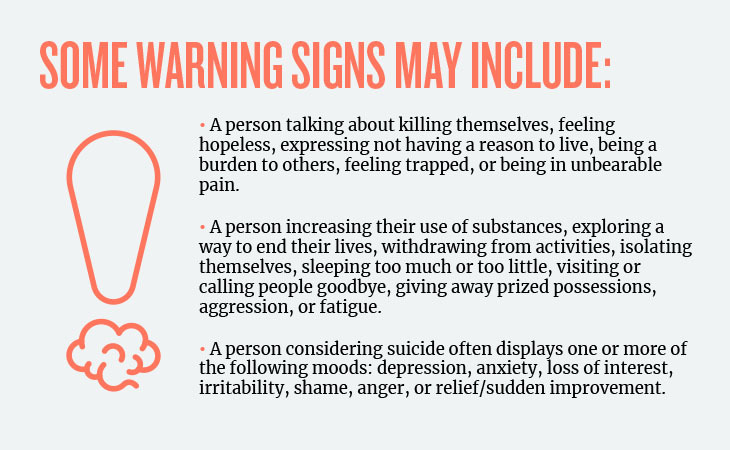
Understanding the signs.
The more we understand about suicide, what keeps people from moving from ideation to action, and what puts people at higher risk, the better equipped we are to support those struggling.
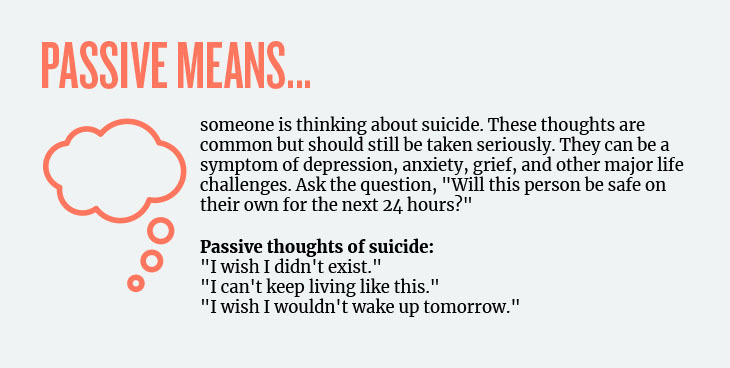
Passive vs. Active
Have the conversation.
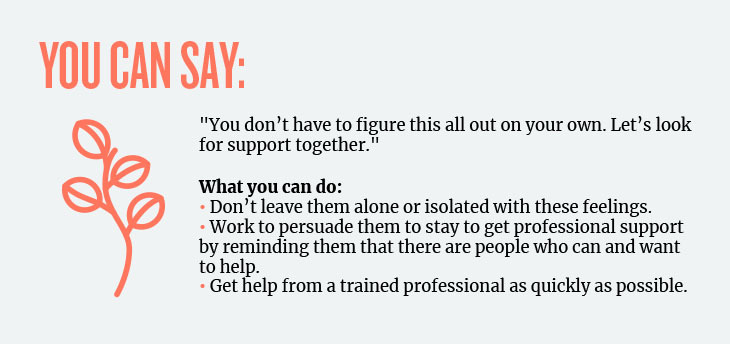
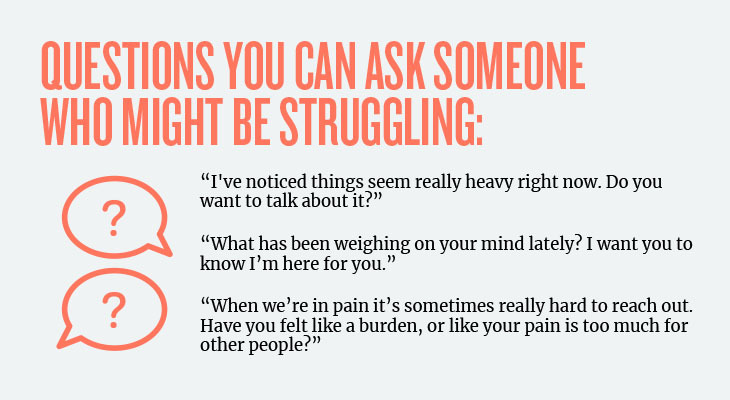
It does not have to be complicated. Checking in with yourself or someone you care about can save a life. If you are concerned about a friend or family member it’s important to ask direct questions, listen carefully, and create the space for them to feel safe enough to be honest.
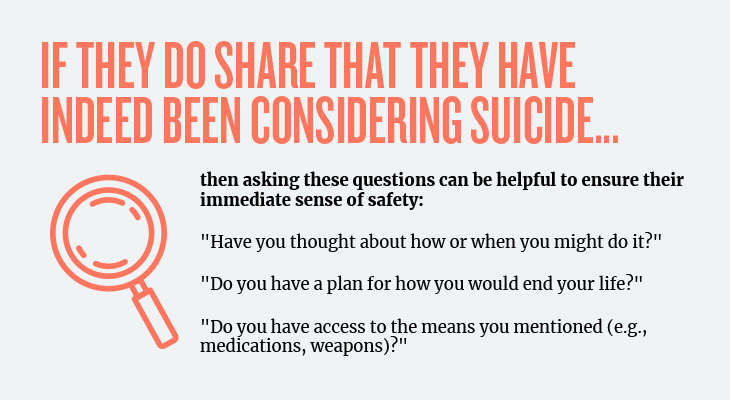
If they have a plan and a means to act on it, do not leave them alone. Seek immediate help by contacting a mental health professional, crisis hotline, or emergency services.