There’s a kind of silence that hums beneath the surface of everyday life.
It’s the silence of people smiling while breaking inside. The silence of laughter that hides exhaustion. The silence of a world that still doesn’t quite know what to do with pain.
We live in a culture that celebrates authenticity—until it gets uncomfortable. We say “mental health matters,” but when someone actually admits they’re not okay, the air shifts. Eyes dart. Words stumble. The silence returns.
And yet, silence is where shame grows best. It convinces us that our pain makes us unlovable, that no one could possibly understand. But the truth is, our stories are the very bridges that can bring us back to one another.
The Hidden Wounds We Carry
Mental health struggles rarely announce themselves. They show up quietly—in the inbox we can’t face, the dinner table where we smile through anxiety, the sleepless nights filled with looping thoughts. For many, the hardest part isn’t the pain itself, but the loneliness that wraps around it.
When we’re hurting, our instinct is to hide. To curate. To self-protect. Vulnerability feels like exposure, like risk—and in a world quick to label or dismiss, that fear makes sense.
But hiding doesn’t heal us. It hardens us. Every unspoken story becomes a brick in the wall between us and the people who could love us through it.
Why Storytelling Heals
Storytelling isn’t just communication—it’s communion. It’s how humans have made sense of suffering for thousands of years. Long before therapy, there were fireside stories, songs, parables, and psalms. Each one said, in its own way, “You are not alone in the dark.”
From a psychological lens, storytelling helps integrate trauma. When we narrate our pain, we transform chaos into coherence. The act of putting feelings into words activates the part of the brain responsible for meaning-making and self-regulation. It literally helps us hold what once felt too big to name.
But on a soul level, storytelling is even more powerful: it lets us be seen. When someone listens—really listens—they become witnesses to our survival. And being witnessed is what turns mere endurance into healing.
Dismantling Stigma—One Story at a Time
Stigma thrives on stereotypes. It paints mental illness as weakness, faith as a cure-all, and therapy as taboo. But stories dismantle those illusions.
When a pastor admits he battles depression, it opens the door for a congregation to breathe. When a mother shares her story of postpartum anxiety, other mothers find the courage to ask for help. When a teenager posts about therapy, a friend somewhere feels less broken for needing the same thing.
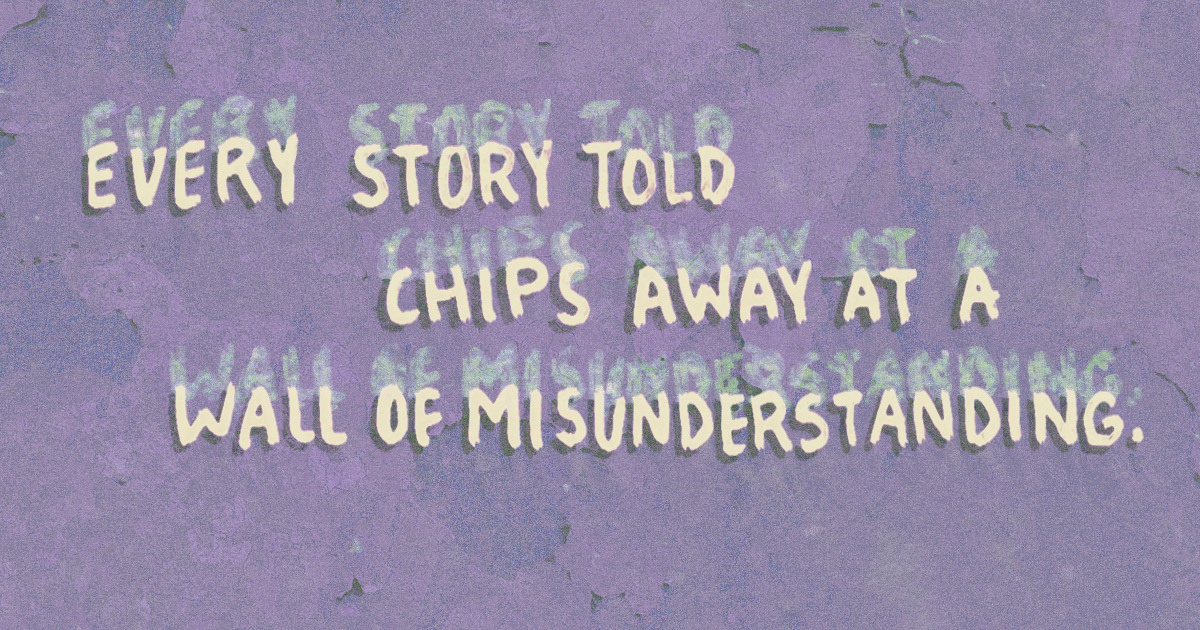
Every story told chips away at a wall of misunderstanding. It shifts the narrative from “them” to “us.” Because it is us—the teachers, nurses, artists, parents, leaders, and students who are quietly fighting to stay. The ones showing up, even when staying alive feels like a full-time job.
The Art of Vulnerability
We often imagine vulnerability as oversharing or weakness. In reality, it’s sacred courage; the decision to show up as you are, without guarantees of how you’ll be received.
Vulnerability says:
“I’m still healing.”
“I don’t have it all figured out.”
“I’m trying.”
And in that honesty, something profound happens: we make space for others to be honest too. The moment you say “me too,” the walls come down. The masks crack. The healing begins.
But vulnerability isn’t only about talking—it’s about listening, too. It’s about holding space for stories that don’t fit tidy arcs of redemption. Sometimes, hope isn’t loud. Sometimes, it’s just a quiet decision to stay another day.
How Storytelling Builds Community
When we share our stories, we build maps for others to find their way out of the dark. Storytelling builds community not through perfection, but through shared humanity. It reminds us that empathy is stronger than fear, and that no one heals alone.
Online communities like To Write Love on Her Arms began because someone dared to tell the truth about pain and hope in the same breath. Thousands followed because they recognized themselves in that story. That’s the magic of storytelling—it multiplies compassion.
Healing isn’t a solo act; it’s a chorus. When our stories intertwine, they become something larger than survival—they become solidarity.
For Those Still Finding the Words
If you’re reading this and you’re struggling, know this: your story doesn’t have to sound eloquent to matter. You don’t have to be ready to share it publicly. Healing starts quietly, sometimes with a single sentence whispered in a safe space.
Here are a few gentle places to begin:
- Write privately. Journaling, poetry, or even voice notes can help release what’s been trapped inside.
- Speak to one person you trust. Let someone hold part of the weight with you.
- Reach out for help. Therapy and support groups aren’t signs of weakness—they’re investments in your future.
- Find stories that mirror yours. Reading or listening to others’ experiences can make you feel seen and less alone.
- Practice patience. Healing isn’t linear. Some days it’s storytelling. Other days it’s silence. Both are valid.
The Hope Inside the Telling
Here’s the paradox: storytelling won’t erase your pain, but it can transform it. Pain, when spoken, becomes purpose. Wounds, when shared, become wisdom. And silence, when broken, becomes song.
Each story of survival becomes a thread in a tapestry of hope. A living testimony that says: healing is possible, connection is real, and even here, even now, there is still light.
So tell your story. Tell it messy, tell it scared, tell it unfinished. Because somewhere, someone needs to know they’re not the only one.
And maybe that someone is you.
Alexia Jons writes about faith, mental health, and the intersection of storytelling and spirituality. She’s passionate about helping young people and families engage deeply with biblical truth while finding hope and healing in their everyday lives. Through her writing, she encourages others to see vulnerability not as weakness, but as a path toward connection and grace. When she’s not writing, Alexia enjoys photography, long walks with her family, and capturing moments of quiet beauty in everyday life. You can connect with her on Facebook.
People need other people. You are not weak for wanting or needing support. If you’re seeking professional help, we encourage you to use TWLOHA’s FIND HELP Tool. If you reside outside of the US, please browse our growing International Resources database. You can also text TWLOHA to 741741 to be connected for free, 24/7 to a trained Crisis Text Line counselor. If it’s encouragement or a listening ear that you need, email our team at [email protected].
natasha
This is beautiful. Thank you so much for sharing. I live with bipolar disorder and created a community that is safe and welcoming for all people living and trying to learn about mental illness. Sending love and light your way.
https://bipolarbabesclub.com/bipolar-routine-triggers/
Lynn McDonald
My story began sixty years ago when I met the most beautiful, brilliant, compassionate, loving and giving man imaginable. He saved me from a horribly abusive family. He was only sixteen but he took my hand and my heart. He taught me that I was enough. Until the day he died he believed I was enough. In 1969 I became pregnant. Barry left for college. On April 26, 1970 our daughter was born. Three days later we learned that she had multiple, uncorrectable heart defects. They said she wouldn’t live more than six weeks. We named her Bethany after the town where Lazarus was raised. She was discharged from the heart hospital at six weeks. The doctors said there was nothing more they could do for her and we should take her home to die. She died 53 years later. Bethany graduated college and fell in love. She and her husband started fostering special needs children. After fostering almost twenty kids they found a kid who needed a home and loving parents. They adopted their first son, Joseph. He was four years old at the time. Then they fostered Daniel, a three year old boy whose mother beat him because he wouldn’t stop crying. The mother was seven months pregnant at the time. When Russell was one day old he was given to Art and Bethany so the siblings could be raised together. They were finally able to adopt Daniel and Russell. All three boys are autistic. Joseph is high functioning and is now a chef. Daniel is the most developmentally disabled but he now lives in a group home and works cleaning hotel rooms. Russell has severe anger issues and is unable to work or socialize well. He lives with his father. Bethany passed away in November of 2023 of complications from her heart disease. Barry and I mourned her death but we were grateful for the 53 years we had with her. Then on October 10, 2024 as we sat on the balcony of our ballroom Barry turned to me and said. “Call 911, I can’t breathe!” These are the last words he uttered. He was rushed to Westchester Medical Center where we learned he was paralyzed from the neck down. He had a breathing tube inserted. On October 12th, five days before our 57th anniversary he indicated that he wanted to have the tube removed. The tube was removed and he was pronounced dead at 9:01 PM. My daughter was dead, my son was in Florida and couldn’t get a flight home. I was alone until my “son” from another mother arrived at the hospital to hold me while we said goodbye to Barry. Casey spoke to Barry about what it meant to him to be loved by Barry and how Barry shaped Casey’s life. I will never forget that moment. I will never forget the love that washed over me that night. I am truly blessed.
Alicia
Thoughtful and beautifully well written. I have a reminder on my mirror that it’s about “Presence Over Perfection.” It doesn’t matter how you tell it, who you tell it to, or where it’s done… as long as you tell your story, it’ll be heard, it’ll help you heal, and it’ll help heal someone else.
V
I really wish I could believe this right now