This piece talks about suicide and thoughts of suicide. Please use your discretion. The name of the person lost to suicide has also been changed to respect privacy.
On February 1st, 2026, it was the one-year anniversary of my friend, Tate, dying by suicide. It is hard to fathom that it has been a year. We had grown up going to summer camp together, running through the heart of the wooded mountain, unknowingly both looking for some kind of escape from the intense feelings we were feeling.
I hadn’t talked to them in five years, kept up with their life through the little photos in boxes on the interwebs, and believed the lies that social media tells: That we are all fine and nobody could possibly be struggling like me. They, like me, were overachievers, and I suspect they, too, would carry the label of being overcontrolled. They were nonbinary, cut their hair short, and changed their name just like me. They will never know the other similarities we shared. I wish every day that we could have talked about our similarities and that maybe I had been more open and reached out.
On the day I received the news of their death, I was at my parents’ house in treatment purgatory. I had just been hospitalized, yet again, for not being able to keep myself safe. I had already tried residential treatment two years prior and attempted to take my own life one month following my graduation from that program. I was resigned to the fact that I would die by suicide. Losing Tate and another family friend to suicide shortly before entering treatment for a second time would prove to have a significant impact on me.
When I finally entered treatment following my friend’s death, I was feeling all sorts of intense feelings. But something about fighting for my own life, when Tate had lost theirs to a similar battle, made me begin to question things. I began to see what I call “The After”, what the world looks like after you leave it. It leaves those left behind with unimaginable grief, long nights wondering what they could have done, and for me, wrestling with why I got a second chance at life when they didn’t. I still can’t tell you why I made it out, and they didn’t. But I can tell you that after about six weeks of treatment and being allowed to wrestle with my depression on my own terms, I decided to take suicide off the table. I decided to see a life where it didn’t end by suicide. And as for me coming to that decision, I have many people and things to thank, and seeing “The After” was certainly one of them.
When you take your own life, the world does not simply go on as it did before. A large range of people’s lives are irrevocably changed. You might have come to terms with how your family and close friends would feel, but the impact of your death will spread like wildfire. You might find someone like me, an old, distant friend, lost in profound grief, seeing so much of themselves in you. This grief hit me like a truck once I stopped having to devote so much energy to my own survival. For those considering suicide, I urge you to consider The After and hold onto the truth that tomorrow needs you.
To those who have lost loved ones or even strangers to suicide, I want to tell you that, regardless of your relation to the person, your grief is valid. For a long time, I thought that my grief was taking up space that didn’t belong to me. I was not only feeling the intense emotions that come with grief, but also shame. I then learned that grief knows no boundary and is limitless. We all deserve to take up space as we process the collective grief that comes with suicide. We are all doing the best we can, and that is enough.
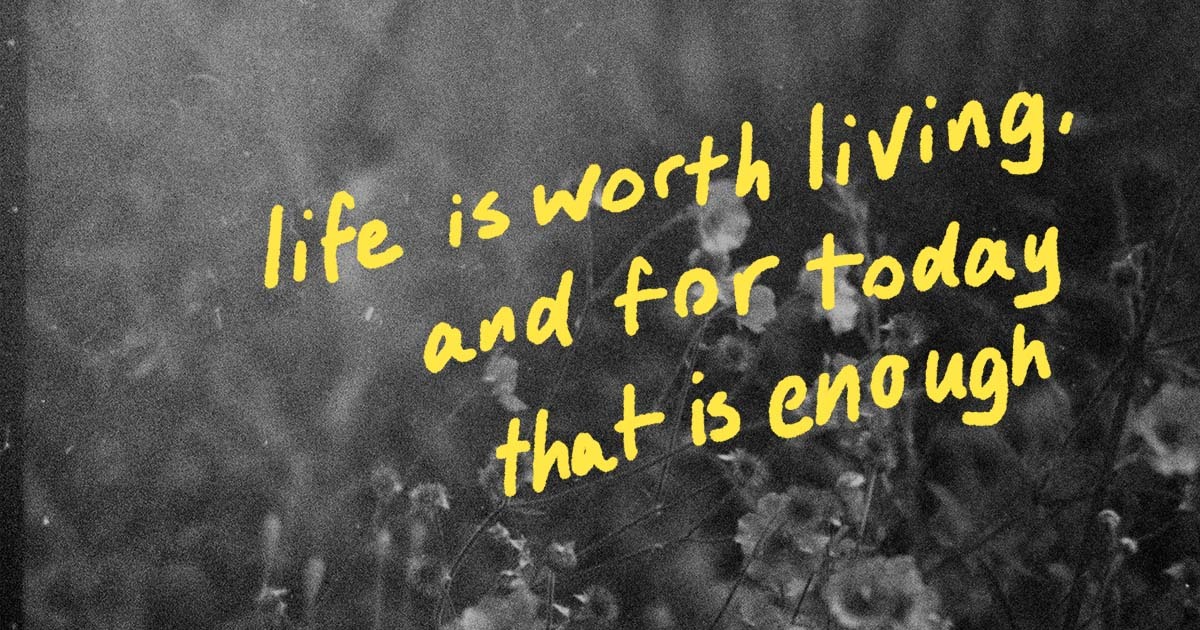
I think about Tate every day, and I wish they had made a different decision. I wish all people who took their own lives had made a different decision. As I sit here a year later, I can’t remember the last time I had a suicidal thought. You know the ones that almost crushed me, and I thought would never end. I don’t know why I made it, and so many others don’t. I do know, though, that life is worth living and for today that is enough.
Whatever you are facing, there is always hope. And we will hold on to hope until you’re able to grasp it yourself. If you’re thinking about suicide, we encourage you to use TWLOHA’s FIND HELP Tool to locate professional help and to read more stories like this one here. If you reside outside of the US, please browse our growing International Resources database. You can also text TWLOHA to 741741 to be connected for free, 24/7 to a trained Crisis Text Line counselor.