Self-injury has been talked about and addressed by TWLOHA since the very beginning. Our story started to help one person who struggled with self-injury, and has been a core part of our mission statement ever since. This matters more than most people might think because self-injury often remains one of the most stigmatized and misunderstood mental health challenges.
There is so much shame and misconception that surrounds self-injury. Let’s talk about what you might have heard, and what’s actually true.
Misconception: Self-injury is directly correlated with teenagers, especially teenage girls.
Reality: Yes, many people who struggle with self-injury are indeed teenagers. However, the belief that self-injury is a “young people’s problem” is a gross generalization. Self-injury does not only impact those under the age of 20. It does not appear or stop within a specified age range. It does not target a specific gender identity either. Someone can be well into adulthood and continue to cope through self-injury. Age (and gender) does not matter, but that misconception does, as those who are beyond their teenage years can be made to feel immature or abnormal.
Misconception: Self-injury is a purely attention-seeking behavior.
Reality: First, there’s negativity surrounding the term “attention-seeking” as our society has deemed it as something to shame and belittle. But what if that “cry for help” is rooted in just that? A bid for help when someone doesn’t know how else to seek the concern or care they are in need of. If we lack the skills and safety to communicate our deepest needs, we find other ways to let those things be known. Yes, every situation is nuanced, every person is different, but we all deserve the opportunity to be met with genuine support and the space to share without shame or ridicule.
Misconception: Self-injury is a choice.
Reality: Self-injury, like addiction or eating disorders, is not a habit that a person can simply stop without proper care, support, and healing. Self-injury is an adaptive coping mechanism that brings tangible, even if brief, relief to the person engaging with it. Just as eating disorders offer a sense of control or comfort, self-injury often becomes a maladaptive means of relieving stress and emotional pain that feels unmanageable—especially if we haven’t learned how to regulate ourselves, alleviate stress, or decompress.
Misconception: Self-injury is uncommon and something no one wants to talk about.
Reality: Self-injury remains one of the most engaged with topics within our community, whether that’s on our website or on our social media channels. People have shared about their struggles with self-injury on the TWLOHA blog consistently over the last 20 years and counting. We receive countless comments of “me too” and “I still struggle” on social media posts addressing the topic. And it’s obvious that talking and writing about these things releases shame, lessens stigma, and opens people up to community healing.
More than anything, we want to give to those who have or are struggling with self-injury some reassurance—because we know how isolating it can be and how heavy it can feel…
Some truths to carry with you when stigma or shame try to narrate:
You are not weird or gross or too emotional for struggling with self-injury.
You are not defined by your pain or your struggle with self-injury.
You do not have to keep your self-injury scars or experience hidden.
You are not behind if you struggle with self-injury as an adult.
You can talk about it and heal from it.
You are human, and as humans with hearts, we find ourselves in moments of hurt. We find ways to cope and lessen that hurt, that pain. You may have learned to cope through self-injury, and there are different, more compassionate ways you can find the relief you seek. You and your body deserve kindness, gentleness, and acceptance.
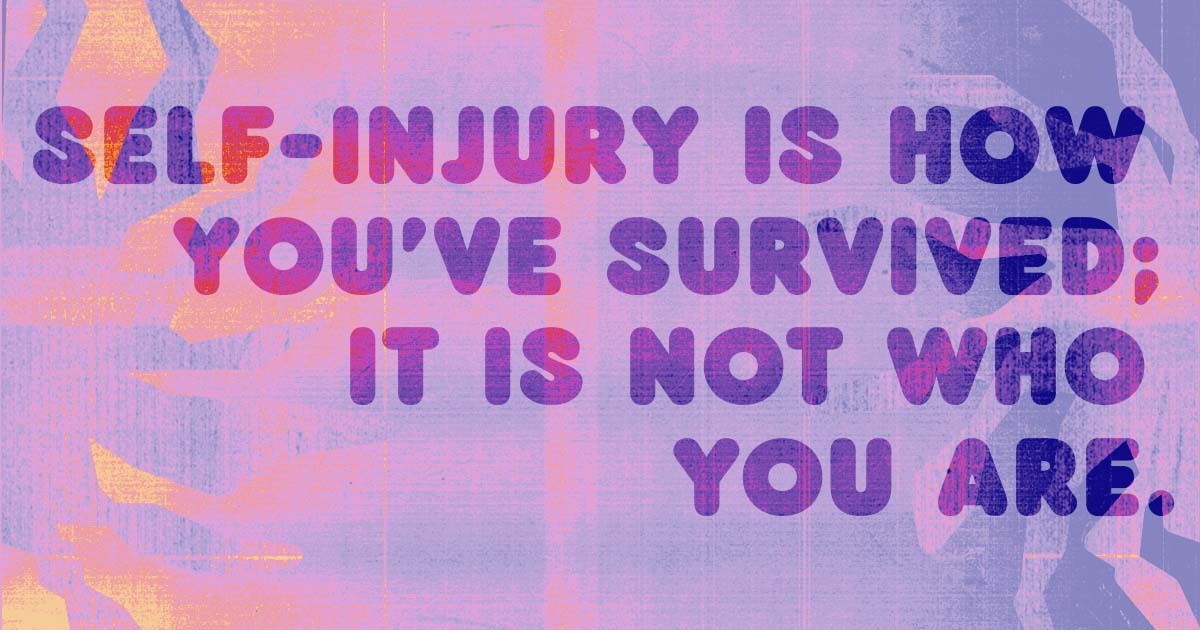
Self-injury is how you’ve survived; it is not who you are, and it is not correlated, in any way, to your worth. Not then. Not now. Not in the future. No matter what.
Kathryn
Thank you.
I know these things, on an intellectual level, but there isn’t a direct link from what our brain knows to what our heart feels. There are times that I hear something one too many times and even though I know the truth, I start to doubt myself anyway.
Thank you for the reminders.
Jason
I was with you until the last few sentences. It’s definitely correlated to my worth.
TWLOHA
Hi Jason,
We understand how you might struggle to believe that your worth is inherent, that it does not change regardless of your mental health experience, your productivity, and so on. You are worthy of care, of support, of joy, of health even if you struggle with self-harm. We truly believe this.
If you want a safe space to share, you can always email us at [email protected], you can also text TWLOHA to 741741 if you’d like to text for free with a trained crisis counselor. You don’t have to navigate this alone.
With Hope,
TWLOHA