Would you risk your life to bring hope to your community?
In 2024, I met a young woman at a mental health conference. She was an incredible speaker, and yet here she was asking me how she could take the advocacy work I was doing and bring it into her community.
The more we talked and discussed ideas, the more I realized this wasn’t some fun hobby for her; it was life or death. And in some communities, advocating for mental health isn’t comfortable; it’s dangerous.
On one hand, her passion shone bright. On the other, I could see the fear in her eyes—a fear I’d recognized in my own.
A few years earlier, I, too, was afraid. But I wasn’t afraid that seeking help or being an advocate would get me killed. I was scared that it meant something was wrong with me. That I wasn’t faithful enough. Not praying enough. Not trusting God enough.
Shortly after I graduated college, I was diagnosed with 10+ physical and mental illnesses. When I shared those struggles with a spiritual figure I trusted, their words baffled me: “It’s all in your head.” I began to wonder: If I were a real Christian, would I still feel this way?
After this encounter, it took me many more years to seek help. Shame clothed me like a blanket (and not the soothing, anxiety-relieving kind), and lies assigned themselves to my name:
I thought being faithful meant being strong.
Having anxiety meant I lacked faith.
Needing help equated to failure.
But what if our struggles aren’t evidence that we’re “bad” Christians? What if they’re evidence that we’re human?
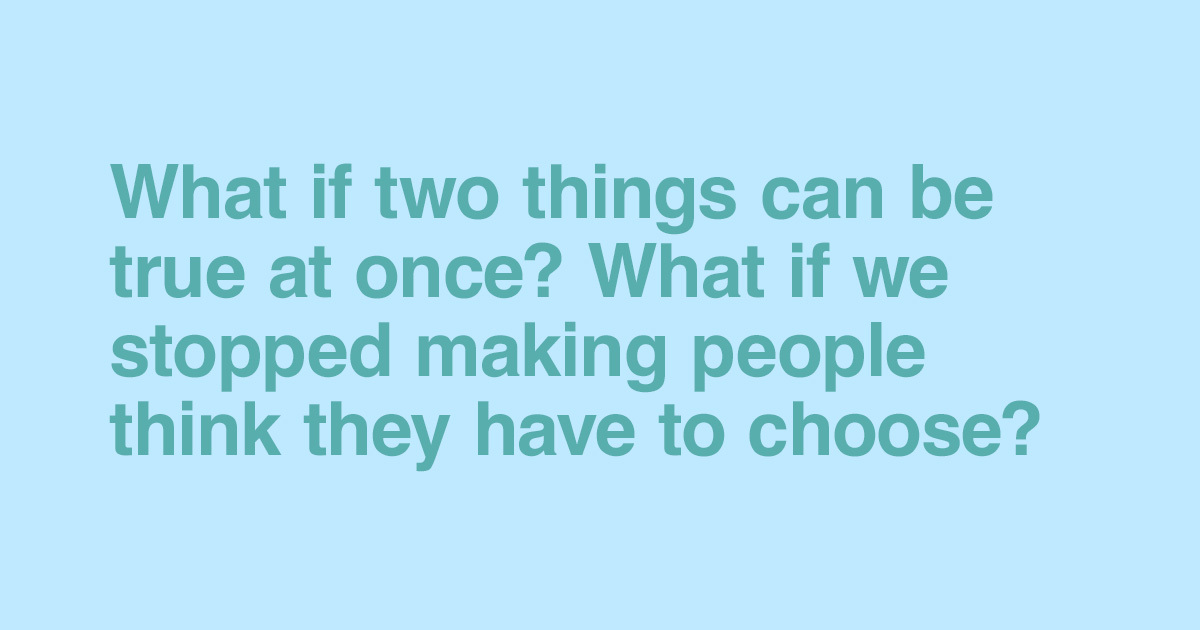
Unfortunately, many spiritual spaces are really good at making people think they have to choose between faith OR therapy, prayer OR medication, trusting God OR admitting you’re struggling, strength OR vulnerability. But what if two things can be true at once? What if we stopped making people think they have to choose?
While I still believe in God, I can understand why someone might walk away. They’re tired of being told that their pain is a spiritual failure. But I also wish they could know that the God I’ve come to know isn’t asking them to pretend.
In the Psalms, David, a man after God’s own heart, tells us that God is close to the brokenhearted. Jesus chose to enter human suffering, and maybe the reason Scripture contains so much language about suffering is that God knew we’d need words for it.
I don’t know what you’ve been told about your suffering. I don’t know the weight you’ve carried or the darkness that makes it impossible to get out of bed. But I know my own. And I want you to know that asking for help isn’t a failure of faith. Sometimes it’s one of the ways we practice it.
For me, prayer is how I talk to God about what I’m going through. He’s someone safe I can talk to anytime, anywhere. But it isn’t the only way I seek help.
I see no contradiction in praying AND going to therapy.
Trusting God AND taking medication.
Having a spiritual mentor AND calling a doctor.
Finding good friends AND investing in an even better community.
But don’t you dare believe the lies any longer. Because being faithful doesn’t always mean being strong. And having anxiety doesn’t mean something is spiritually wrong with you. And needing help is never a failure.
Faith communities can be a safe space, but they can also cause harm. My prayer is that we, as people who have come to understand mental health, will reflect the love we profess in these spaces.
If you’ve been hurt by religion, I’m not going to tell you to get over it or just trust God.
If you’ve been told your mental illness is a sin, I’m not going to shame you or tell you to ignore the pain.
And if you’ve walked away because you needed somewhere safer to breathe, I can’t blame you.
But I hope you know there can be something on the other side of judgment, pain, and a whole lot of questions.
For me, I found a God who doesn’t ask me to perform for Him, but loves me as I am. I found a God who isn’t disappointed in me when I struggle but invites me to tell Him exactly how I’m doing. I found a God who sits with me in the hard places—from the first tiny pill I swallowed to the therapist telling me I’d indeed “lived through trauma.”
I found hope. Strength when I had none. Permission to be human. And I’m still finding those things. I still go to therapy. I pray. I take medication. I still have lots of hard days and need people to walk with me when I struggle. I’m still a person of faith. But you know what I’m no longer afraid of?
I’m no longer afraid of risking everything I am to bring hope to someone who is hurting.
I still think about the woman I met at that mental health conference sometimes. I don’t know what happened after our conversation—whether or not she was able to take her passion and share it with the world. I don’t know what risks she faced or what it cost her to keep going. But I’ll never forget the look in her eyes.
Maybe courage isn’t the absence of fear, but being willing to say, “I’m not okay.”
Maybe it’s making the appointment, calling the doctor, taking the medication, going to therapy, or leaving a community that isn’t safe and finding one that is.
Maybe it’s choosing to believe when you feel lost, or praying to a God you’re not even sure you believe in. Maybe it’s bringing our whole messy, struggling selves to God, a counselor, or a friend and saying, “I’m here. I’m scared. I don’t know what to do. Please help.”
I spent years believing faith meant being strong enough not to struggle. Now I understand faith differently. Sometimes faith is having the courage to tell the truth about where you are and letting someone meet you there. God. A therapist. A friend. Your pet. Anyone who makes you feel a little less alone.
But maybe hope isn’t always the absence of darkness.
Maybe hope is someone who lights up the darkness by sitting with you in it.
A voice saying, “I’m here. I care. We’re in this together. I’m not going anywhere.”
And maybe faith looks a lot like that, too. Maybe it looks different in the dark.
People need other people. You are not weak for wanting or needing support. If you’re seeking professional help, we encourage you to use TWLOHA’s FIND HELP Tool. If you reside outside of the US, please browse our growing International Resources database. You can also text TWLOHA to 741741 to be connected for free, 24/7 to a trained Crisis Text Line counselor. If it’s encouragement or a listening ear that you need, email our team at [email protected].