I saw a video on social media (where else?) that has stuck with me ever since. It featured two decent-looking bananas and a hammer. One of the bananas took a single, nasty blow. The second banana took smaller hits that were delivered over and over, in varying spots and at varying times. The two bananas wound up looking quite different at the end of the video. That one event demolished the first. The second was a mess from multiple “smaller” events.
If a banana were a person, I would likely resemble the latter.
You see, it wasn’t one big event. It was a series of small, momentary instances rooted in emotional overwhelm and neglect. I learned, repeatedly, that it wasn’t safe to have, share, or express big emotions. They were inconvenient and couldn’t be met with the care and compassion they deserved. Instead, it was safer, much safer, to seek belonging and acceptance—even praise—by being there for others while I kept my own concerns, fears, and emotions inside. I held space. I soothed. I offered deep empathy and encouragement. For caregivers, adults, siblings, and friends.
For years, decades really, I’ve thought of my experiences with trauma—early, repeated loss, emotional neglect, parentification, exploitation of empathetic characteristics—as small instances of crappy things that were survivable. And survive I did. My nervous system adapted in some pretty remarkable ways. I became hypervigilant. I used my empathetic nature to observe and absorb the room I was in. I could sense what everyone was feeling, and I felt that it was my job to then prevent, acknowledge, soothe, and mediate. It was a superpower.
I was the family therapist and the town mayor. I was the empath and the people-pleaser you could go to for comfort, a compassionate listening ear, and sage advice. On the outside, I was kind, charismatic, and emotionally intelligent. On the inside? My body was chronically stressed, alert, and bracing.
In my twenties, I wanted to “solve” or rectify it by helping my caregivers see the hurt, the error of their ways. This was just another form of parentification. Taking on the responsibility that was theirs. I also placed my time and energy into something I couldn’t control.
My childhood wasn’t “horrific.” My physical needs were met. There was food. I was clothed. I went to school. I had birthday parties and sleepovers. I even went to my fair share of concerts as a teenager. When someone asked how my childhood was, I often said it was wonderful. The truth is, I wasn’t ready then to face the fact that it wasn’t a cakewalk—especially from an emotional standpoint. So even as I painted a pretty picture for others and my own heart, my body began telling a very different story.
Childhood trauma and chronic fight-or-flight don’t show up in a catastrophic wave or a blazing wildfire. The effects express themselves in a much steadier build and slow deterioration. The expressions are vast and person-specific. Studies link childhood trauma and chronic stress to poor metabolic health, weakened immune function, mental health challenges, blood disorders, and thyroid issues. For me, it showed up first through PMOS (formerly known as PCOS) and disordered eating in my late teens, then came the histamine intolerance and inflammation sprinkled in, and most recently with immune dysfunction and dysautonomia arising in my early to mid-thirties. That’s a lot of words and challenges for a singular body. Sadly, it is a body trying to raise red flags while also trying to keep itself safe and somehow functioning under chronic stress. Our bodies are incredibly intelligent; they’re also not bulletproof, even to the things we’d like to say we’re resilient or strong enough to endure on a regular basis. Research is clearly showing this.
There was certainly a grief that arose in these most recent years as these issues compounded. A grief that I wasn’t as tough as I thought or made of “Teflon” as I projected. The reality that I was deeply sensitive and could be so impacted by not having a felt sense of safety or my emotional needs met left me feeling pretty weak and defective. Within that grief, there was compassion and acceptance.
Ultimately, the reality check was sobering and validating:
Parts of my childhood impacted my body and being, inarguably, in very deep ways.
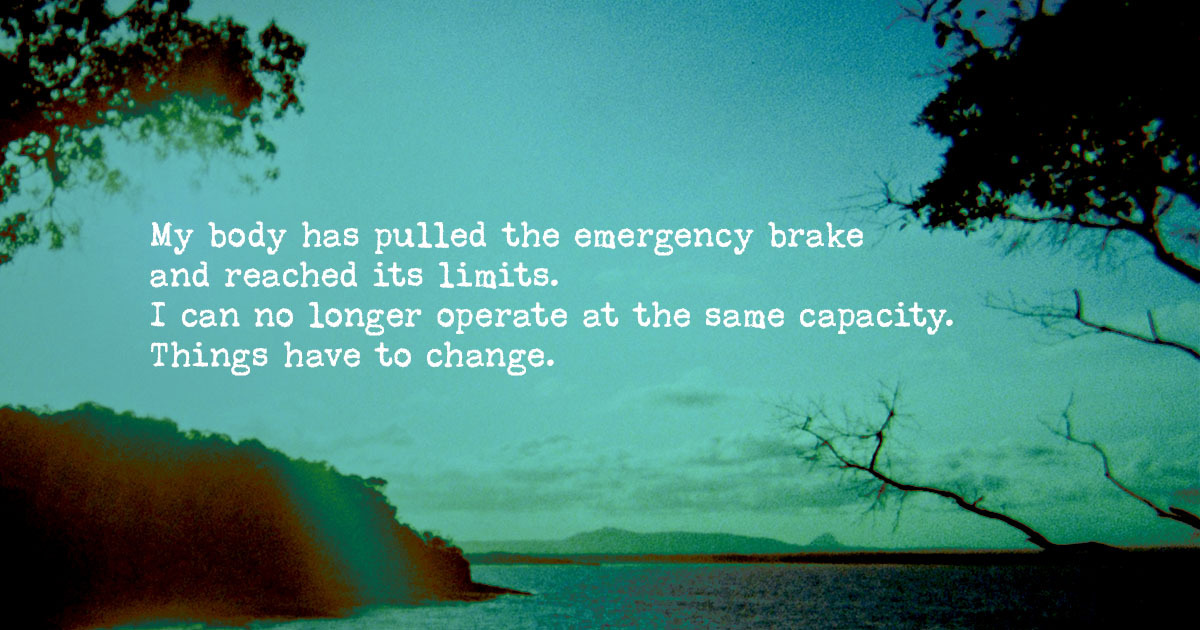
My body has pulled the emergency brake and reached its limits.
I can no longer operate at the same capacity.
Things have to change.
I need support: emotionally and physically.
So what does healing look like today, in the present moment, where I’m a grown woman facing and decoding a body obviously overwhelmed and feeling unsafe—all while peeling back the layers of decades-old buried or foggy memories and painful realities?
I’m saying no and doing less, which is incredibly hard and also liberating for a (former) people-pleaser and emotionally parentified daughter. For those who need to hear it: No is a complete sentence, and it’s a necessary one.
I’m embracing that inner “woo” by tending to my exhausted system (and vagus nerve) by humming, splashing cold water on my face or pressing cold packs to my inner wrists or the nape of my neck, doing a handful of psychological sighs, or expanding my field of vision with intention. Whenever I feel that shift into hypervigilance, I immediately lean on one of these.
When those things don’t cut it, and the environment or situation itself is too much? I remove myself. I take a break. I leave early. I give myself space. Even if it feels dramatic or inconvenient to the part of me that’s learned to be easy and enduring.
When people who do feel safe are with me, I organically allow myself to show up authentically, to have needs, to express hurt or uncomfortable feelings. These moments, when they do arise, allow for healing to transpire through connection. The ingrained belief that it isn’t safe to have needs or big emotions gets challenged and rewired.
Lastly, sometimes we need help. Our bodies and our minds. That’s where the external support really comes in. Trauma-informed therapy. Doctor’s appointments and blood tests (that unfortunately add to the confusion and frustration). Supplements or medication designed to assist, not solve, or be taken on a whim (even a hopeful, well-intentioned whim).
If you’re here, if you’ve been here, if you know this all too well… I’m sorry. You deserved better. And while I wish we could rewrite the past or heal the relationships that were meant to nurture us but left wounds, we are faced with the less fairytale solution and the more empowering one. The one where we reparent those inner children. We hold boundaries on their behalf. We provide them with rest and nourishment and therapy and safe environments and emotionally intelligent people. You are the answer, and you also don’t have to do it all alone. It’s a paradox, but it’s true.
You’re more than your pain, more than what happened. You are strong enough to heal from the heavy you carry. We encourage you to use TWLOHA’s FIND HELP Tool to locate professional help and to read more stories like this one here. If you reside outside of the US, please browse our growing International Resources database. You can also text TWLOHA to 741741 to be connected for free, 24/7, to a trained Crisis Text Line counselor. If it’s encouragement or a listening ear that you need, email our team at [email protected].